
 Price
Price
 Motor (Nominal)
 Range
Range
 Battery
Technical Architecture
Overview

Price
$1,499
MSRP

Motor
750 W
Nominal Output · 1,400 W peak

Battery
680 Wh
Battery Capacity

Speed
28 mph
Unlocked Top Speed

Payload
350 lbs
Max Load Capacity · bike weighs 45 lbs

Safety Standards
UL 2849 Certified
Electrical System Integrity
UL 2271 Certified
Battery Performance & Safety

Foldable
No
Frame style(s): Step-Thru
Score breakdown
41 out of 100 — Not recommended
The arithmetic, in full
Power & Drive8 / 16
Battery & Range6.5 / 21
Safety & Braking8 / 14
Ride Quality & Components13 / 32
Utility & Practicality1 / 8
Display & Connectivity4.5 / 9
Performance score41 / 100
Value — 41 points ÷ $1,49927.4 pts per $1,000
Show every metric and rung — how each subtotal was earned
Every metric below is a ladder. The bike sits on one rung, and that rung’s points are the points it earns. Add the six category subtotals and you get the score at the top of the page. There is no weighting step, no normalisation and nothing rounded away.
Adding a bike never moves another bike’s score. The score is absolute, not a curve. A bike that earned 62 in January earns 62 in December unless its specification changes or we correct a data error — and we log every correction.
Power & Drive
Peak power output1.5 / 9.5
This bike: 720 W — 600–749 W
Under 600 W0 pts600–749 W1.5 ptsThis bike750–899 W2.5 pts900–1,049 W4 pts1,050–1,199 W5.5 pts1,200–1,349 W7 pts1,350–1,499 W8 pts1,500 W or more9.5 pts
System voltage x controller amperage - the one number that decides acceleration and hill climbing. Scored once, not three times.
Pedal-assist sensing3.5 / 3.5
This bike: Torque — Torque sensor
Cadence sensor only0 ptsTorque sensor3.5 ptsThis bike
A torque sensor measures how hard you pedal and matches it. Every bike has at least a cadence sensor, so cadence alone earns nothing.
Throttle1 / 1
This bike: Yes — Throttle included
No throttle0 ptsThrottle included1 ptThis bike
Lets you pull away from a stop without pedalling - useful with a load, on a hill, in traffic, or with joint pain.
Speed class2 / 2
This bike: 28 mph — 28 mph (Class 3)
Below 20 mph0 pts20–27 mph (Class 1/2)0.5 pts28 mph (Class 3)2 ptsThis bike
Class 3 bikes (28 mph) keep pace with city traffic. Class 1 and 2 stop assisting at 20 mph.
Battery & Range
Usable battery capacity6 / 12
This bike: 680 Wh — 650–799 Wh
Under 350 Wh0 pts350–499 Wh2 pts500–649 Wh4 pts650–799 Wh6 ptsThis bike800–999 Wh8 pts1,000–1,299 Wh10 pts1,300 Wh or more12 pts
Total watt-hours you can carry, counting a second battery if one is included. Capacity is scored once whether it arrives in one pack or two.
Charger speed0 / 3
This bike: 96 W charger — Under 100 W
Under 100 W0 ptsThis bike100–149 W0.5 pts150–199 W1 pt200–249 W2 pts250–349 W2.5 pts350 W or more3 pts
The charger's own output in watts. Scored on the charger alone so that a large battery is not penalised, and so a 36 V high-amp charger cannot pass for a 48 V one.
Cell supplier0 / 2
This bike: China Tier 1 — Not LG, Samsung or Panasonic
Not LG, Samsung or Panasonic0 ptsThis bikeLG, Samsung or Panasonic2 pts
Cells from LG, Samsung or Panasonic publish cycle-life and thermal data. Anything else earns nothing.
Battery ingress protection0.5 / 4
This bike: IPX5
Not published or IPX40 ptsIPX50.5 ptsThis bikeIP65 / IPX62 ptsIPX7 / IP674 pts
The published IP rating of the battery pack - not the bike. IPX5 is a water-jet test only; IP65 adds a dust-tight claim; IPX7 adds immersion.
Safety & Braking
Braking system3 / 6.5
This bike: Hydro 2p — Hydraulic disc, 2-piston
Rim, V-brake, coaster or mechanical disc0 ptsHydraulic disc, 2-piston3 ptsThis bikeHydraulic disc, 4-piston6.5 pts
Mechanical disc is the bare minimum and earns nothing. Hydraulic discs stop harder with less hand effort; a four-piston calliper is more than twice the braking power of a two-piston and over double the price.
Brake hardware0 / 2.5
This bike: OEM — Unbranded or not published
Unbranded or not published0 ptsThis bikeTier-2 name brand (Tektro, Star Union)1 ptPremium (Magura, Shimano, SRAM, TRP, Hayes)2.5 pts
Whether pads, rotors and callipers can be bought and serviced anywhere. Tektro and Star Union are both serviceable; Magura is better.
Motor cut-off at the brake lever2 / 2
This bike: Yes — Motor cut-off at the brake lever
Throttle fitted, no cut-off at the lever0 ptsMotor cut-off at the brake lever2 ptsThis bikeNo throttle fitted - the failure mode does not apply2 pts
On a throttle bike, squeezing the brake should cut motor power. It is a backstop for a stuck throttle or a controller fault. A bike with no throttle cannot have that failure, so it scores full marks here.
Brake-activated light1.5 / 1.5
This bike: Yes — Brake-activated rear light
No brake light0 ptsBrake-activated rear light1.5 ptsThis bike
A rear light that brightens under braking is the cheapest way to be seen slowing down.
Turn signals1.5 / 1.5
This bike: Yes — Integrated turn signals
No turn signals0 ptsIntegrated turn signals1.5 ptsThis bike
Signal without taking a hand off the bars.
Ride Quality & Components
Suspension0.5 / 11
This bike: Rigid Aluminum — Rigid aluminium or carbon fork
Rigid steel fork0 ptsRigid aluminium or carbon fork0.5 ptsThis bikeUnbranded suspension fork2.5 ptsName-brand suspension fork (SR Suntour, RST, KKE)6.5 ptsPremium suspension fork (Fox, RockShox, Marzocchi)9 ptsPremium fork plus rear suspension11 pts
A rigid steel fork costs about $6 to make; a name-brand suspension fork is $80 or more. The spread reflects that.
Drivetrain4 / 10.5
This bike: 8 (11:32) / Shimano Altus — 7–8 speed, mid tier
Single-speed chain0 pts3–7 speed, entry tier2 ptsSingle-speed belt drive4 pts7–8 speed, mid tier4 ptsThis bike9+ speed, quality tier7 ptsInternally-geared hub or gearbox with belt10.5 pts
Gear range, shifting quality and maintenance burden on one ladder. An internally-geared hub with a belt is several levels above a single-speed chain and costs roughly eighty times as much.
Tyres1.5 / 1.5
This bike: Kenda — Premium brand (Maxxis, Schwalbe, Kenda, Continental)
Unbranded or OEM0 ptsValue brand (CST, Chaoyang, Innova)1 ptPremium brand (Maxxis, Schwalbe, Kenda, Continental)1.5 ptsThis bike
The best available proxy for grip, rolling resistance and puncture resistance. Deliberately kept small - a name-brand tyre is only about $5 more.
Frame finish1.5 / 2
This bike: Smooth — Smooth welds
Basic welds0 ptsSmooth welds1.5 ptsThis bikeGravity-cast or hydroformed2 pts
Weld finish is a visible proxy for frame manufacturing control.
Axle standard2 / 2.5
This bike: Yes — Thru-axle
Bolt-on or nutted axle0 ptsQuick-release axle0.5 ptsThru-axle2 ptsThis bikeThreaded thru-axle2.5 pts
A thru-axle holds the wheel more securely than a quick-release; a threaded thru-axle more securely still.
Stem1.5 / 2
This bike: Adjustable — Tooled adjustable stem
Non-adjustable stem0 ptsTooled adjustable stem1.5 ptsThis bikeQuick-release adjustable stem2 pts
An adjustable stem lets one bike fit several riders. A quick-release adjustable stem costs roughly triple a tooled one.
Pedals1.5 / 2
This bike: Aluminum — Aluminium
Plastic0 ptsSteel0.5 ptsAluminium1.5 ptsThis bikeQuick-release aluminium2 pts
The part most owners replace first. Quick-release aluminium pedals fold the bike into a smaller space and do not snap.
Lock-on grips0.5 / 0.5
This bike: Yes — Lock-on grips
Standard grips0 ptsLock-on grips0.5 ptsThis bike
Lock-on grips do not twist loose or slide off in the wet.
Utility & Practicality
Rack & cargo system0 / 4
This bike: No (sold seperately) / N/A — No rack included
No rack included0 ptsThis bikeSteel rack1.5 ptsAluminium rack2.5 ptsAluminium rack with standard accessory interface (MIK/AVS)4 pts
Whether the bike carries anything out of the box, and whether accessories clip to a published standard instead of needing bungee cords.
Fenders & weather protection0 / 2.5
This bike: No (sold seperately) / N/A — No fenders
No fenders0 ptsThis bikeBasic plastic fenders0.5 ptsMetal fenders2 ptsFull-coverage composite fenders2.5 pts
Full-coverage fenders are what make an e-bike usable in the rain. Composite fenders do not rattle, rust or cut.
Kickstand1 / 1.5
This bike: Rigid — Fixed kickstand
No kickstand0 ptsFixed kickstand1 ptThis bikeAdjustable or double-leg kickstand1.5 pts
An adjustable or double-leg stand holds a loaded bike upright.
Display & Connectivity
Display2.5 / 6.5
This bike: Color LCD — Colour LCD or OLED
LED indicator only0 ptsMonochrome LCD1.5 ptsColour LCD or OLED2.5 ptsThis bikeTFT4.5 ptsTouchscreen TFT6.5 pts
How much you can read at a glance, in sunlight, without stopping. A touchscreen TFT is $40-50 of cost over a colour LCD.
Rider tuning1.5 / 2
This bike: Somewhat — Partial tuning
No rider tuning0 ptsPartial tuning1.5 ptsThis bikeFull rider tuning2 pts
Whether you can change how the bike delivers power, or only how much.
App connectivity0.5 / 0.5
This bike: Yes — App connectivity
No app0 ptsApp connectivity0.5 ptsThis bike
Useful for firmware updates and diagnostics. Nice to have, but most riders do not use it.
Features we show but do not score
0 points — useful to know, not evidence of quality—Quick-release pedals✓Lock-on grips—Tyre sealant fitted—Plastic-free packaging—Second battery included—Foldable frame
These are real, checkable facts about the bike, and buyers ask about them. None of them predicts whether the bike is good, so none of them moves the score. Quick-release pedals are convenient; they are not a quarter of a braking system.
Editorial Insights
Key Benefits & Drawbacks
Reasons to Buy
- Delivers a strong balance of performance and value for everyday riding.
- Features intuitive controls that are welcoming for first-time e-bike riders.
- Sturdy frame construction ensures long-term durability.
Reasons to Avoid
- May lack the specialized components required for extreme off-road use.
- Heavier curb weight compared to premium, lightweight analog bicycles.
Expert Verdict
In-Depth Analysis
Editorial Review: Evaluating theVenus
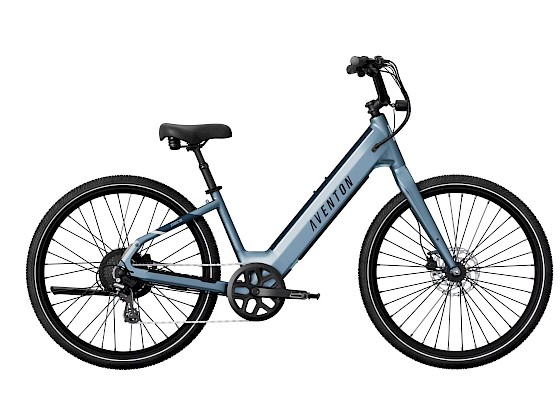
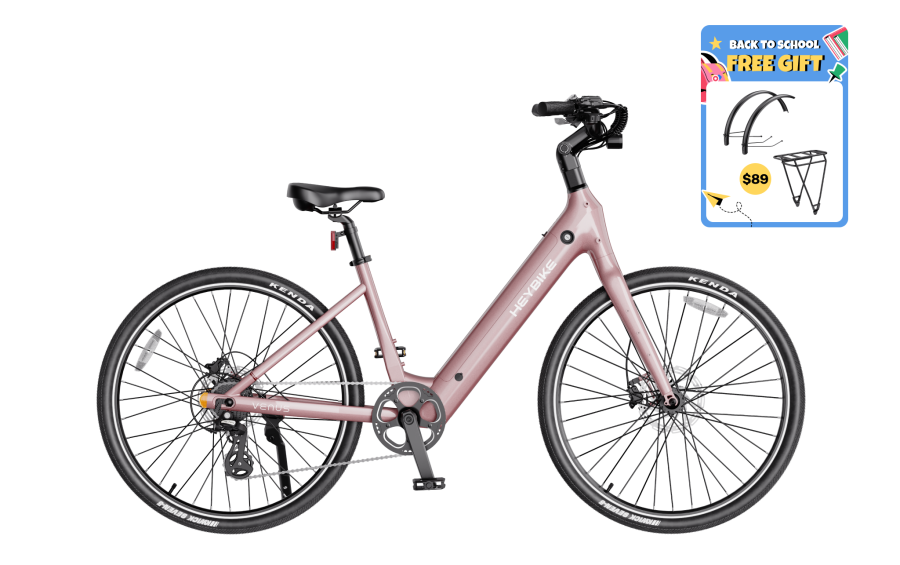
The Heybike Venus marks a dramatic evolution in Heybike’s typical design philosophy, shifting away from their heavy, utilitarian fat-tire folders and stepping directly into the arena of sleek, lightweight, European-inspired urban cruisers.
Positioned as a direct challenger to elegant pavement cruisers, the Venus completely strips away the clunky, industrial e-bike look. It utilizes a gorgeously sculpted hydroformed frame with virtually seamless weld lines. Weighing in at a remarkably nimble 50 pounds—a rarity for a bike packed with a high-output 750W motor—it pairs a rigid, athletic front end with a highly advanced sensor system that lets you choose exactly how you want to ride.
The Technical Snapshot
- Power & Nimble Speed: Driven by a punchy 750W nominal Galaxy eDrive rear hub motor that peaks out at a wild 1100W and 70Nm of torque. Ships configured as a Class 2 bike (20 mph max), but easily unlocks via the display or Heybike app to hit Class 3 speeds of up to 28 mph on pedal assist.
- The Dual-Sensor Game Changer: Features an advanced, on-the-fly swappable sensor ecosystem. By simply holding down the "M" button on the cockpit, you can toggle between a standard cadence sensor (for effortless, cruise-control gliding) or a highly responsive torque sensor (for an instantaneous, natural pedal response that matches your physical effort).
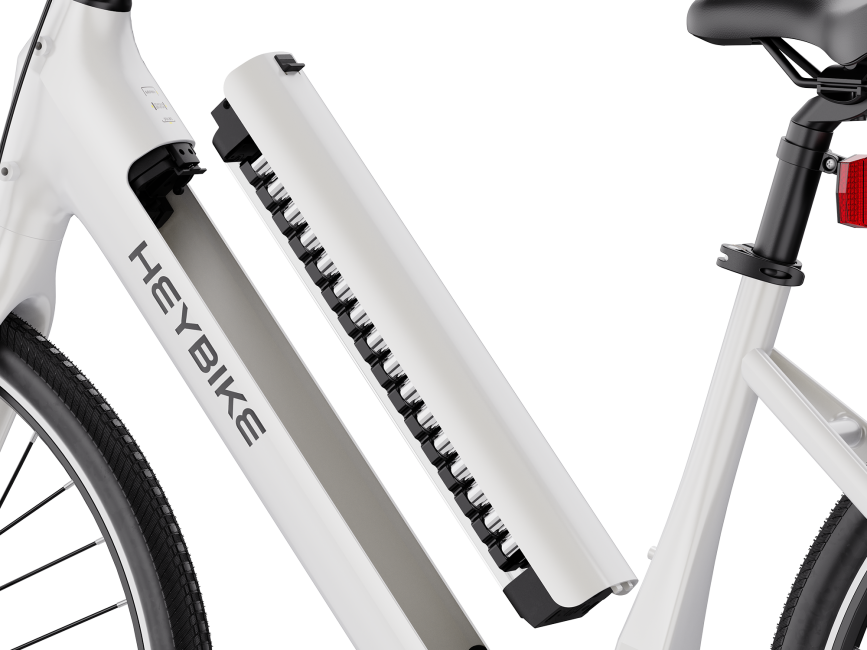
- Battery & Top-Load Efficiency: Powered by a unique 48V 14.2Ah (680Wh) top-loading battery tucked cleanly into the downtube. The top-load orientation makes it infinitely easier to drop in or pull out for indoor charging than bottom-loading frames. It nets an impressive maximum range of 85 miles in ideal Eco conditions, and features full UL 2271 (battery) and UL 2849 (full electrical system) safety certifications.
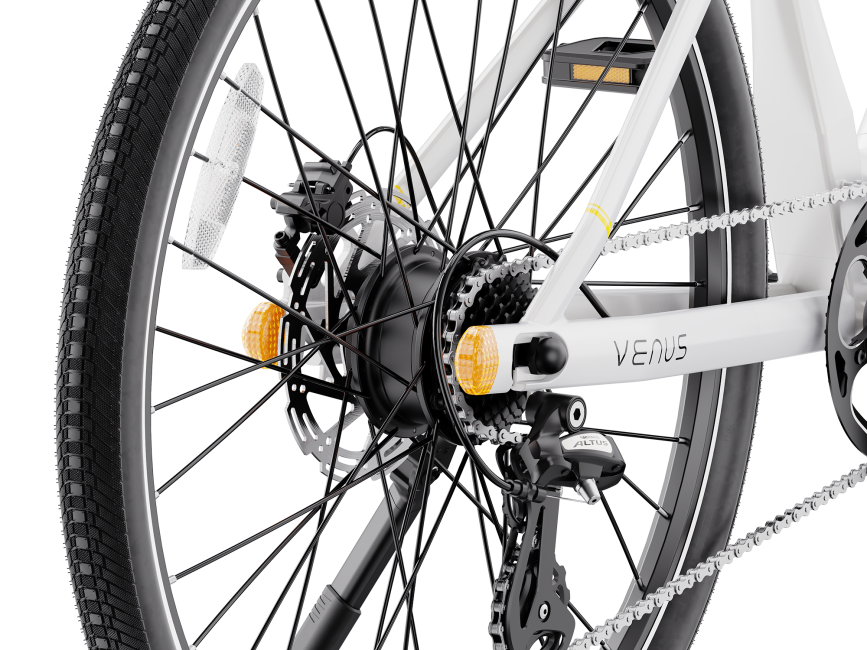
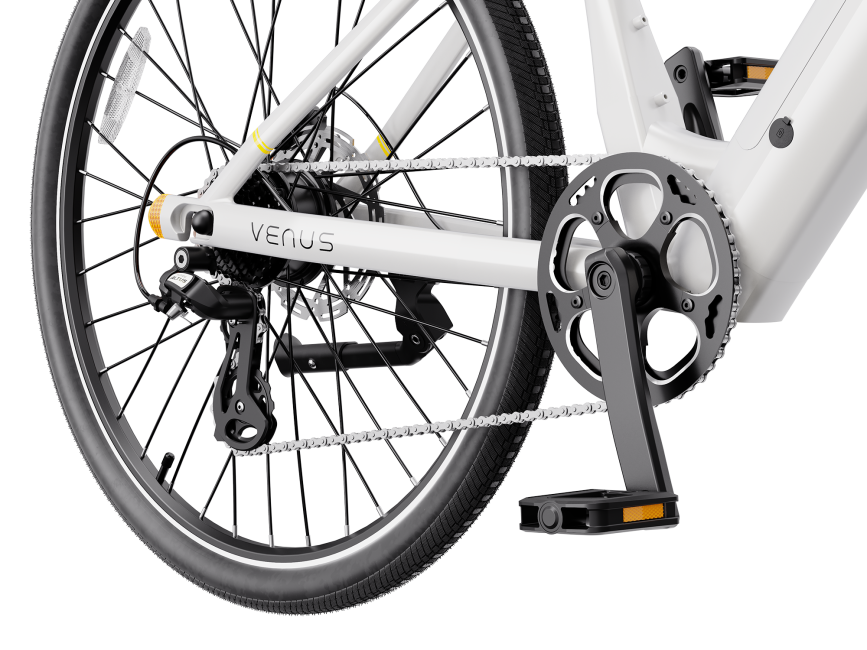
- Brakes & Smooth Shifting: Outfitted with crisp hydraulic disc brakes clamped onto 180mm rotors for reliable, light-touch stopping power in wet or dry conditions. The mechanical side uses an 8-speed Shimano Altus drivetrain (11-32T) paired with a 48T front chainring.
- The Rigid-Fork Stance: To maintain its agile, ultra-lightweight profile and ensure zero frame flex, Heybike intentionally swapped out heavy suspension forks for a stiff, hydroformed rigid aluminum fork.
- Tires & Sturdy Geometry: Rolls on fast-rolling, quiet-running 27.5x2.2-inch Kenda Kwick Seven-5 commuter tires that track beautifully on city pavement. The open step-through frame features an adjustable 90-degree stem and swept-back cruiser bars, comfortably accommodating riders from 4'11" to 6'2" (supporting a solid 350-pound maximum payload).
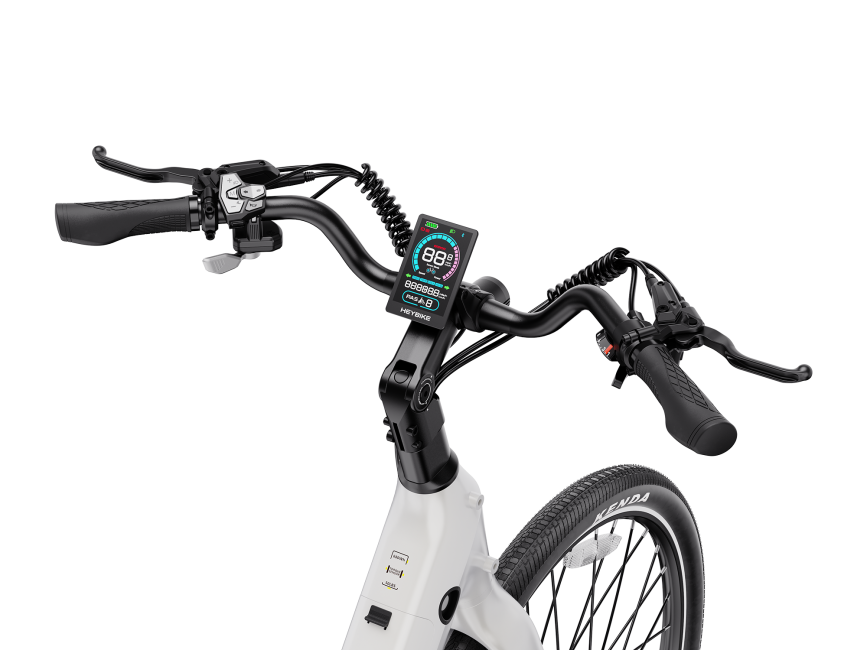
- Baking In Traffic Safety: Stands out with sleek, flush frame-integrated rear turn signals seamlessly built into the frame tubes. The tech package is rounded out by a high-output headlight, an integrated electronic horn, and a vibrant color LCD screen equipped with a USB-C device charging port.
A Note on Customization: To keep the baseline aesthetics ultra-clean and lightweight, the Venus ships without a standard rear rack or heavy metal fenders. If you plan to use it for wet-weather commuting or heavy grocery hauling, you will want to factor in ordering Heybike's custom color-matched rack (rated for 66 lbs) and fender kit.
Key Specifications
Venus
Performance
- Motor (Nominal)
- 750 W
- Motor (Peak)
- 1,400 W
- Battery
- 680 Wh
- Battery (Ah)
- --
- Range
- 85 mi
- Top Speed
- 28 mph
Practicality
- Price
- $1,499
- Weight
- 45 lbs
- Payload Capacity
- 350 lbs
- Foldable
- No
Real-World Range Estimator
Fine-tuned for the 680 Wh Battery
34 mi
Motor Type
Terrain Profile
The Science of eBike Range
Estimated range is total usable battery capacity divided by adjusted energy consumption: Range (mi) = Battery (Wh) ÷ Adjusted Consumption (Wh/mi). Manufacturer range claims are measured in ideal lab conditions, so this model starts from a real-world baseline and applies a multiplier for each factor you change above.
The variables
- Baseline: 20 Wh per mile, for a 180 lb rider on flat ground using standard assist with a hub motor. Every adjustment below is a multiplier against that number.
- PAS level: assist is banded rather than linear, because a controller delivers set power steps rather than a smooth ramp. Levels 1–2 draw 30% less energy than standard, level 4 draws 30% more, and level 5 draws 60% more — the jump at the top is steep because aerodynamic drag rises with the square of speed.
- Motor type: mid-drive motors run through the gearing, so they hold a more efficient operating range under load and consume roughly 14% less energy than a hub motor over the same route. Hub motors lose more to heat when they bog down on climbs.
- Rider weight: consumption rises 5% for every full 20 lbs over the 180 lb baseline, reflecting the extra rolling resistance and the energy lost accelerating more mass back up to speed.
- Terrain: a hilly profile adds 30% over flat ground. Regenerative braking recovers very little of what a climb costs, so elevation is close to a straight energy penalty.
This estimate is independent of the Battery & Range score in the rating breakdown, which scores the published specification rather than predicting a single ride. Treat the figure as a planning guide — tyre pressure, wind, temperature and stop-start riding all move the real number.
You May Also Like